Important pages are missing
Investigate access, indexing directives, canonical signals and content delivery. A Search Console label is a starting point, not a complete explanation.
Work directly with Muhammad Usaid Zaheer
A technical SEO consultant identifies crawling, indexing, rendering and performance problems, then helps your team prioritize, implement and verify the right fixes.
Tell me what changed, which pages matter and what your team has already tried. I’ll help connect the symptoms to evidence and turn confirmed issues into practical work.
Technical SEO enquiry
Share your website and main concern. I’ll review the details and respond about the next step.
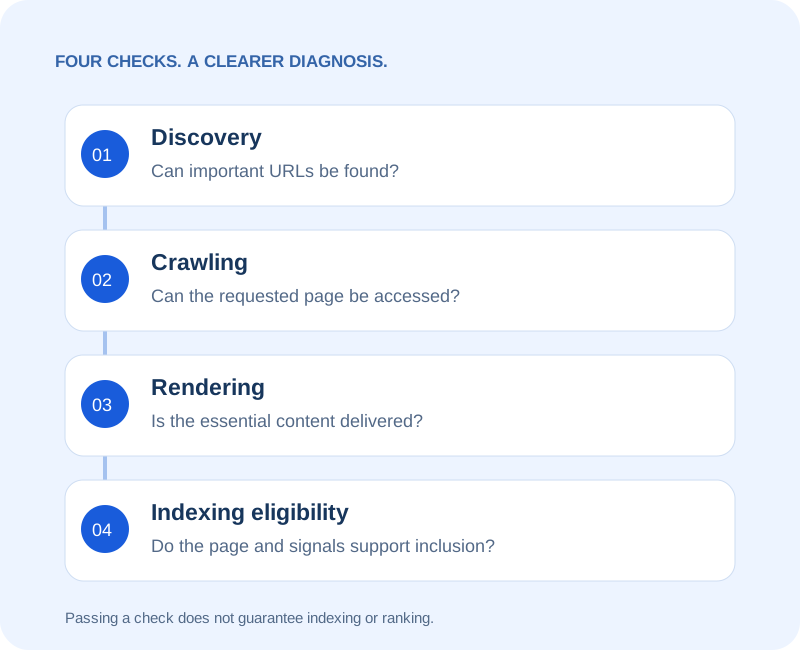
Check each part of the journey
A page can be known to Google without being crawled, crawled without being indexed, or indexed without attracting relevant traffic. These situations need different investigations.
I review representative URLs and templates, compare what the server returns with what renders, and connect that evidence with Search Console and available crawl data. The goal is to locate the actual constraint before changing the site.
Need the background first? Read what technical SEO covers or the guide to a website not showing on Google.
When specialist help is useful
Investigate access, indexing directives, canonical signals and content delivery. A Search Console label is a starting point, not a complete explanation.
Compare affected templates and the release timeline. Separate technical regressions from changes in search demand, content or competition.
Identify which findings affect valuable pages and which are low-impact or intentional. Turn the useful evidence into an ordered development backlog.
Technical SEO consulting scope
The scope follows your website and the problem. Your proposal identifies the areas, templates, implementation support and checks included.
Review responses, robots rules, noindex directives, XML sitemaps and selected URL evidence. Check whether important pages can be accessed and whether instructions agree.
Deliverable: An affected-URL record and specific corrections where needed.
Review preferred URLs, duplicate patterns, redirect chains and parameter handling. Preserve useful existing addresses unless a change has a clear purpose.
Deliverable: URL rules, redirect requirements and validation examples.
Compare initial HTML with rendered content, links and metadata. Investigate resource failures or content that depends on user interaction before recommending changes.
Deliverable: Reproducible examples and requirements for your developer.
Review navigation, orphaned pages, pagination and generated URL patterns. For larger sites, examine crawl activity or logs when the available evidence warrants it.
Deliverable: An architecture or crawl-control plan tied to important pages.
Review loading, responsiveness and visual stability using available real-user data and diagnostic tests. Investigate the templates and resources behind the problem.
Deliverable: Prioritized performance tasks and before/after checks.
Check markup against visible content and relevant requirements. Where needed, review language versions, hreflang relationships and compatible canonical signals.
Deliverable: Scoped corrections, representative examples and validation notes.
Share an affected URL and the symptom you can see.
Prioritize by evidence and consequence
I weigh the importance of affected pages, scope, evidence, dependencies and effort. The loudest tool warning is not automatically the most important task.
Every actual task includes the affected URLs or template, observation, evidence, proposed action, owner and acceptance check. The example above is a workflow illustration, not a finding about your website.
Test what is delivered
A website can look complete in your browser while a failing resource or client-side dependency prevents essential content from appearing reliably elsewhere. JavaScript itself is not the diagnosis.
I compare the response and rendered page, check important links and inspect representative templates. Your developer receives a reproducible issue and an expected result, rather than a blanket instruction to replace the framework.
If the main problem is what the page says rather than how it is delivered, on-page SEO support addresses content, intent and page structure.
Performance with context
Core Web Vitals help evaluate loading, responsiveness and visual stability. I use available field data to understand real-user experience and lab tests to investigate possible causes.
Can visitors see the main content promptly? Investigate its delivery, images and render-blocking resources.
Does the page respond when someone interacts? Investigate long tasks and heavy interaction handlers.
Does content jump while people use it? Review reserved space, fonts and late-loading elements.
A single lab score does not describe every visitor’s experience. We agree the pages, devices and measurement context, then verify changes without promising rankings from a performance score.
From investigation to release
Establish the affected pages, recent releases, business priorities and existing reports. Arrange appropriate access to the data needed for the agreed investigation.
Review representative URLs, crawl output, Search Console and relevant technical evidence. Distinguish confirmed defects from hypotheses that need further testing.
Specify what should change, why it matters, who owns it and how it will be verified. Discuss dependencies and effort with the people responsible for delivery.
Test the agreed changes in the appropriate environment. Review representative templates and important user journeys, then recheck the public site after deployment.
Record completed work, remaining issues and follow-up measurements. Agree whether the project ends with handoff or continues through future releases.
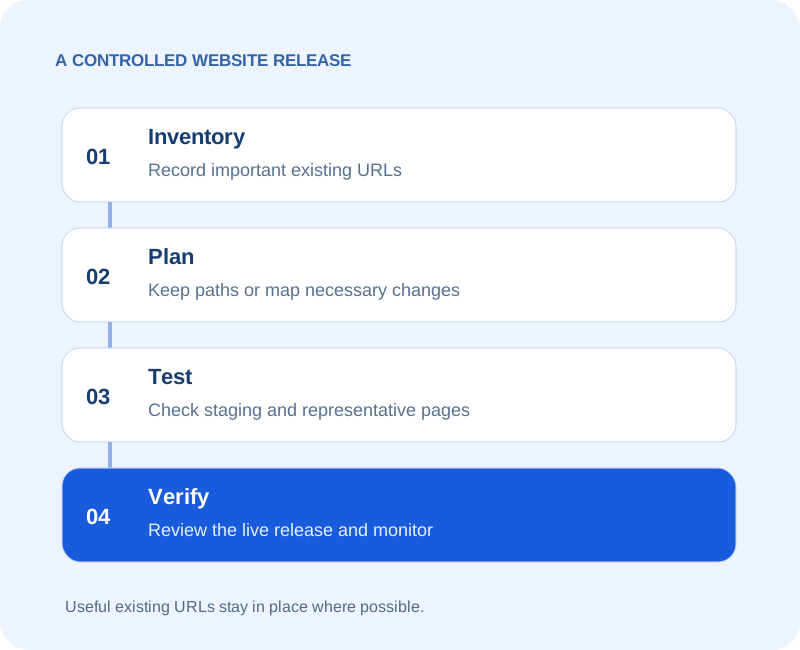
Redesigns and migrations
A redesign or platform change can affect URLs, content delivery, internal links and indexing signals at the same time. SEO input is most useful while those decisions can still be adjusted.
I help inventory important URLs, preserve existing paths where practical and map necessary changes to appropriate destinations. The launch checklist covers redirects, canonicals, sitemaps, access rules and measurement continuity.
Staging checks and live checks serve different purposes. A site that passes a staging review still needs post-launch verification and monitoring as search engines process changes.
Discuss a planned release ↗Support that fits your setup
Investigate plugin interactions, templates, generated archives and resource delivery. Review proposed fixes against the site’s publishing workflow.
Review product and category templates, variants, filters, discontinued items and large URL inventories. Confirm indexing decisions against how customers shop.
Review routing, rendered content, deployment changes and public marketing pages. Coordinate technical requirements with the development team.
Access and platform restrictions affect what can be implemented. The proposal distinguishes consultant guidance, work your team owns and any additional development support.
Useful output for business and development
Findings with affected examples, scope and priority, including uncertainty where more investigation is needed.
Deliverable: A clear explanation of the problems worth addressing.
Implementation tasks with context, proposed behaviour, dependencies and acceptance checks.
Deliverable: Work that your developer can estimate and test.
Completed fixes, checks performed, outstanding actions and the relevant baseline for monitoring.
Deliverable: A practical handoff and an agreed next review point.
For a broader diagnosis across content and authority as well as technical issues, explore the website SEO audit. For combined ongoing work, see SEO consulting services.
Direct expert involvement
You work directly with Muhammad Usaid Zaheer to establish the problem, agree priorities and discuss the evidence. I translate technical findings into language your business and development team can use.
Ask how a proposed fix will be checked, what access it needs and which outcome is still uncertain. Those are more useful questions than whether a provider can promise a perfect health score.
Review documented performance examples and learn about my background. Existing results provide context; they are not a forecast for your website.
Choose the support you need
A focused investigation, a migration review and ongoing release support require different amounts of work. Pricing reflects site complexity, available evidence, implementation responsibility and the review schedule.
I confirm the deliverables and exclusions before starting. You can request a defined project or discuss support alongside your development team; there is no need to commit to unrelated services.
Request a scoped proposal ↗Before starting
Understand the scope, dependencies and expectations before choosing the next step.
A technical SEO consultant investigates how a website is discovered, crawled, rendered and indexed, then turns confirmed issues into prioritized work. The engagement can include developer guidance, implementation support and release checks. Your proposal defines which areas and templates are included.
An audit identifies findings and recommends priorities. Technical consulting can continue through development discussions, implementation decisions, testing and monitoring. If you need diagnosis only, the website SEO audit may be enough; if you need help getting fixes shipped, we can scope that support.
No. Correcting technical barriers can make a page eligible and easier to process, but search engines still decide what to index and rank. Content usefulness, demand, competition and other signals also matter. Implementation success and search outcomes are measured separately.
Yes. I can provide evidence, affected examples, a proposed change and acceptance checks for your team. We agree responsibilities, access and release timing. Additional implementation support can be included where the platform and project scope allow it.
Yes, subject to the platform, access and agreed scope. WordPress and ecommerce projects often involve plugins, templates and URL rules. JavaScript applications need checks of the initial response, rendered content and routing. Findings determine the work rather than the platform name alone.
No. These are more relevant when site scale, URL generation or crawl evidence suggests a meaningful discovery or processing problem. For a smaller site, a specific access error, content issue or weak internal link may deserve attention first. Log analysis also depends on useful server data being available.
Robots.txt controls crawling and is not a dependable removal method. Google needs to access a page to read its noindex directive. The appropriate approach depends on whether the page should remain available, move, disappear or require authentication.
Yes. The scope can cover existing URL inventory, proposed changes, redirect mapping where needed, template checks, launch validation and monitoring. Keep useful existing URLs where possible. A redesign does not automatically require new slugs or separate replacement pages.
The quote depends on website size and complexity, the problem being investigated, available data, implementation responsibility and review needs. A focused template issue is a different engagement from a migration or ongoing developer support. Deliverables and exclusions are confirmed before work begins.
Investigation and delivery depend on the scope, available access and development schedule. Some corrections are small; architecture or rendering changes need more testing. Search processing follows its own timeline, so I agree work milestones without promising a date for indexing or ranking changes.
A focused project can end after agreed checks and handoff. Ongoing support can be useful for frequent releases, growing catalogues or recurring template changes. The review schedule and monitoring scope should reflect your actual release activity and risk.
Start with the problem you can see
Share your website and the issue or release you want help with.
I’ll review your enquiry and respond about fit, scope and the next step. You can also contact me directly.
Technical SEO enquiry
Share your website and main concern. I’ll review the details and respond about the next step.