Impressions without enough relevant clicks
Compare the queries, search intent and title promise. A clearer description may improve the invitation to click, but position and competing results also matter.
Your on-page SEO expert · Muhammad Usaid Zaheer
On-page SEO services improve your content, titles, headings and internal links so visitors can understand your offer and search engines can interpret your pages.
I connect the queries your customers use with the information they need to choose you. We start with priority pages, agree the changes and check the finished work.
On-Page SEO enquiry
Share your website and main concern. I’ll review the details and respond about the next step.
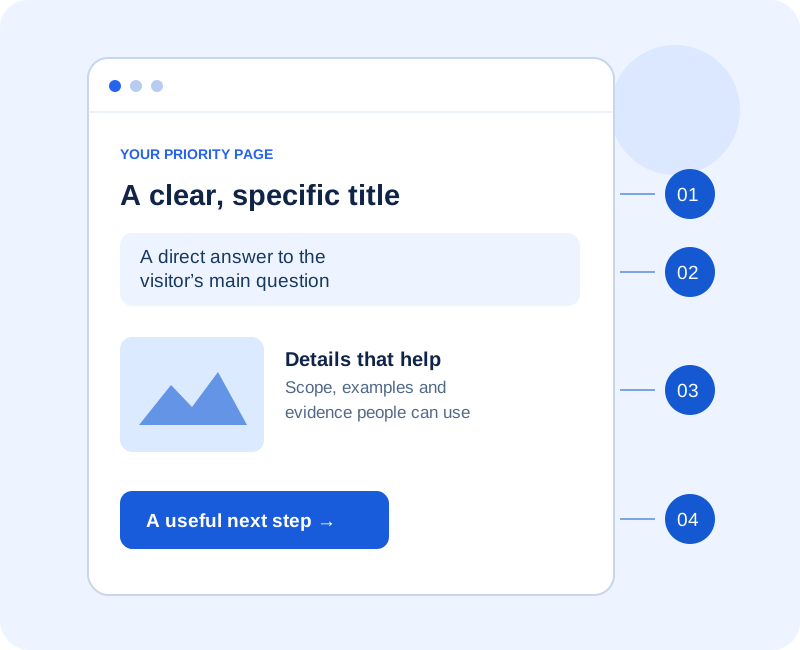
Relevance people can see
A page can be accessible and indexed yet leave visitors unsure whether it solves their problem. The title may promise one thing while the content explains another, or the useful detail may sit below a long introduction.
I review the search result, the page and the next customer action together. The aim is to make the promise accurate, the answer easy to find and the offer straightforward to evaluate.
When to review your pages
Compare the queries, search intent and title promise. A clearer description may improve the invitation to click, but position and competing results also matter.
Find missing service details, weak evidence or confusing next steps. Connect the reader’s question with information that helps them evaluate the offer.
Review page ownership and internal links. Distinguish genuinely separate needs from several URLs repeating the same answer.
If you are unsure whether the constraint is content, technical access or authority, start with a website SEO audit to establish priorities.
Scope built around your website
Your proposal names the pages and work included. Research, copy, implementation and testing are connected so recommendations can become usable changes.
Review customer language, competing results and existing URLs. Group related queries around a clear page purpose rather than creating a page for every variation.
You receive: A priority URL map with primary intent, supporting questions and overlap notes.
Keep useful material, answer missing buyer questions and arrange sections in a sensible order. Add specific examples and evidence supplied by your business.
You receive: A section brief or revised copy, with a clear heading hierarchy.
Write descriptive titles and summaries that match the page. Review template-generated metadata and avoid promising something the landing page does not deliver.
You receive: Page-level metadata recommendations and template rules where appropriate.
Identify useful incoming links, relevant destinations and clear anchor wording. Give visitors a route between the service overview, specialist pages and supporting guides.
You receive: Source URL, destination URL, proposed anchor and placement notes.
Choose visuals that explain the content. Review descriptive alternatives, dimensions and appropriate markup that reflects the visible information.
You receive: Media recommendations and scoped structured-data requirements.
Apply agreed edits or prepare a handoff for your team. Check mobile presentation, links and page output after publication, with technical dependencies recorded.
You receive: A change log, acceptance checks and outstanding actions.
Share the URL and the business outcome it needs to support.
A practical content example
For a service page, the useful change is often greater specificity rather than more words.
Our experienced team offers quality solutions for every customer. Contact us to learn more.
The visitor still needs to know what is included, who it suits and what happens next.
This example shows an editing approach. Real recommendations depend on your offer, audience and existing page evidence.
Connected content
The service hub helps a visitor choose the right type of support. A specialist page explains that offer in depth. A guide answers a narrower learning or troubleshooting question and links to relevant help when useful.
I map those relationships before adding links. Anchor text should explain the destination naturally, and the link should appear where it helps the reader continue.
For this site, SEO consulting services introduces the overall approach, while technical SEO consulting covers access and infrastructure. Off-page SEO addresses external authority. Each page has a distinct job.
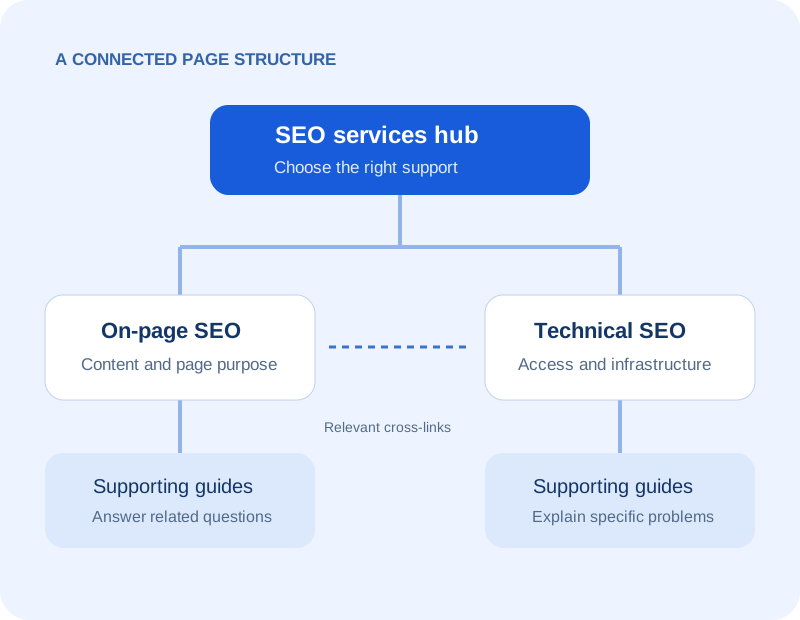
A different approach for each page type
Prioritize pages by business value, observed problems, available evidence and implementation effort. A high-volume query alone is not enough.
Clarify customer fit, scope, evidence and enquiry steps. Preserve the difference between the main services overview and each specialist offer.
Review product information, category purpose, buying questions and useful navigation. Shared template changes need testing across representative pages.
Answer the reader’s question directly, develop the necessary explanation and connect related resources. Keep informational pages distinct from commercial service pages.
Research to implementation
Confirm the offer, priority pages, target audience and desired actions. Review available Search Console and Analytics data, plus any recent website changes.
Study relevant queries and competing pages. Identify what buyers need to know, which material is already useful and where the page lacks clarity or evidence.
Define headings, section answers, metadata, visual requirements and internal links. Confirm the scope with your team before rewriting or changing templates.
Publish approved changes within the agreed access and responsibilities. Verify mobile layout, links, form paths and relevant indexing signals; record unresolved dependencies.
Compare page and query performance with the baseline. Separate completed work from search outcomes and use the evidence to decide what to improve next.
A handoff your team can use
A record of the pages being worked on, their intended audience, observed issues and recommended priorities.
You receive: A clear owner and reason for each change.
Copy or editing instructions, titles, summaries, headings, link placements and media requirements as agreed.
You receive: Specific recommendations that writers and developers can apply.
Completed changes, checks performed, unresolved items and the relevant baseline for follow-up.
You receive: A view of what shipped and what still needs attention.
You retain ownership of your website and accounts. Access is arranged through appropriate permissions. Your team provides accurate service details and approves factual claims before publication.
Progress you can evaluate
Search Console can show changes in relevant queries, impressions, clicks and average position. Analytics and enquiry records help assess whether visitors take the intended next step.
I review those signals alongside seasonality, new content, technical releases and other marketing activity. A change in one metric does not establish that a particular edit caused it.
For ongoing work, the reporting scope and review schedule are agreed before starting. You can explore documented performance examples to see how existing evidence is presented.
Choose the right starting point
Choose on-page work when the main need is intent, content, headings, metadata, internal links or a clearer customer journey.
Choose technical SEO support when crawling, rendering, indexability, migrations or template performance need specialist attention.
Choose an SEO audit when you need evidence and priorities across several possible causes before committing to implementation.
A scope you can compare
Pricing depends on the number and complexity of pages, research needs, existing content quality and who implements the changes. A few focused edits are a different project from rewriting several templates and their supporting content.
I confirm the deliverables and responsibilities before quoting. Compare proposals by the work included, review process and implementation support, rather than keyword counts alone.
Request a scoped proposal ↗Before we start
Understand the scope and working approach before choosing your next step.
The agreed scope can cover keyword and intent mapping, content updates, titles, descriptions, headings, internal links, images and suitable structured data. Your proposal identifies the URLs, deliverables, implementation responsibilities and checks included.
Yes. Useful explanations, original examples and material that already serves the reader are retained. I recommend targeted edits where possible and a fuller rewrite when the page needs a different structure or no longer explains the offer accurately.
The terms commonly describe overlapping work on your own website. This service focuses on page purpose, content, presentation and internal connections. Wider crawling, rendering and infrastructure problems are scoped as technical SEO work.
Yes, subject to access and platform capabilities. Some changes belong in the editor, while others need a template or developer update. We identify those dependencies before confirming implementation scope and test affected templates before wider rollout.
I compare intent, actual page content and available query data before assigning a preferred owner. Related variations can share one page. Consolidation, redirection or separate targeting is recommended only when the evidence supports it; similar wording alone does not prove harmful competition.
Content rewriting and implementation can be included in the proposal. If your team handles delivery, I provide a clear brief and acceptance checks. We agree who supplies subject expertise, approves copy and publishes changes before work begins.
The delivery schedule depends on page count, research, approvals and development. Search response follows its own timeline after changes are processed. We track agreed milestones and page-level performance without promising a ranking date or a fixed increase in traffic.
No. A tool score can help identify items to review, but it does not guarantee visibility, enquiries or sales. I focus on a clear page purpose, useful information, sound implementation and evidence from actual search and customer behaviour.
Clear answers, accessible content and accurate information can make a page easier to understand across search experiences. They do not guarantee inclusion or citation in AI answers. Any dedicated AI visibility research or monitoring is agreed separately.
Either can be appropriate. A focused project addresses an agreed set of pages. Ongoing support reviews new evidence, changing offers and additional opportunities. The proposal sets out what is included, how progress is reported and when priorities are reviewed.
Start with one clear priority
Send your website and the page or problem you want to discuss.
I’ll review your enquiry and respond about the fit, likely scope and next step. Prefer another route? Contact me directly.
On-Page SEO enquiry
Share your website and main concern. I’ll review the details and respond about the next step.