Organic traffic or leads declined
Separate technical changes, demand shifts, content gaps, competition and tracking problems before choosing a response.
Professional website diagnosis
A professional SEO audit should explain what is limiting the website, which problems deserve attention first and how your team will know a fix worked. I combine technical, on-page, content and backlink evidence into one practical roadmap instead of handing you an automated score and an unfiltered list of warnings.
When an audit is useful
The audit is designed to support a decision. Its scope is adjusted to the website, market, platform and available data rather than treating every site as the same checklist.
Separate technical changes, demand shifts, content gaps, competition and tracking problems before choosing a response.
Establish an SEO baseline before a redesign, migration, domain change or major information-architecture release.
Find whether indexation, page quality, authority, cannibalization or prioritization is limiting the next stage.
Replace disconnected tool exports with one evidence-based order of work and clear ownership.
Complete audit scope
A finding in one layer can be caused by another. For example, a content page may look weak because internal architecture hides it, or an indexation pattern may be intentional rather than an error.
Severity and prioritization
The roadmap separates critical barriers from worthwhile improvements and observations.
Priority is based on the importance and number of affected URLs, likely search or user impact, strength of the evidence, implementation effort and dependencies. A tool label alone does not decide the order.
This prevents development time being spent on cosmetic scores while indexation, page ownership or conversion problems remain unresolved.
Problems capable of removing or replacing important search pages.
Confirmed constraints affecting priority templates or demand.
Meaningful work that follows higher-impact dependencies.
Observations requiring more evidence before action.
Special website requirements
Complex websites need additional checks, but they still receive one prioritized outcome rather than several disconnected reports.
Categories, products, variants, faceted navigation, stock behavior, pagination, product schema and commercial page quality.
Language or country structure, hreflang, canonical conflicts, market-specific content and incorrect regional selection.
Delivered HTML, rendering dependencies, links, hydration behavior and content availability to search systems.
Index bloat, duplication, declining articles, orphan content, topic overlap and internal support for business pages.
What you receive
Deliverables can be adjusted for a business owner, marketing team or developer group, but the evidence and priority logic remain visible.
A concise explanation of the major constraints, risks and opportunities for decision-makers.
Findings with affected URLs, examples, evidence, priority, recommended action and acceptance criteria.
A sequenced plan showing dependencies, likely owners and realistic implementation stages.
A clear review of the findings so the team understands the reasoning and can ask informed questions.
Professional audit process
Access to Search Console and Analytics improves the diagnosis, but a useful initial review can still begin with the public website and known business goals.
Goals, history, changes, markets, priority pages and known concerns.
Search Console, Analytics, tracking quality and performance trends.
URLs, templates, directives, rendering, links and structured signals.
Intent, page ownership, quality, competitors and conversion paths.
Impact, confidence, effort, dependencies and risk.
Roadmap, walkthrough, implementation questions and validation plan.
Sample evidence standard
An audit does not promise a ranking. It gives the team a stronger basis for deciding and measuring what happens next.
Search Console and Analytics views can document the baseline and later change, while crawls and page checks verify implementation. Results are interpreted alongside new content, links, algorithm changes and seasonality rather than attributing everything to the audit itself.
See the case-study evidence policy ↗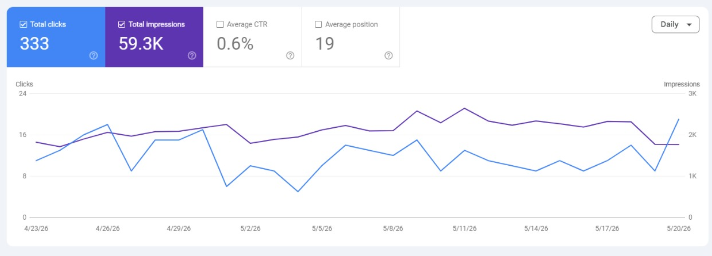
A practical commercial engagement
You can begin with a focused project or continue through monthly or annual SEO management. The recommendation is based on the website condition and business goal, not a fixed package.
Choose a one-time service, expert consulting, monthly management or a longer growth plan.
We can rewrite pages, create supporting blogs and use our own developer when implementation requires code.
Ongoing clients receive a clear PDF update each week and can arrange a Google Meet when useful.
Pricing reflects the website, competition, target market, goals and actual workload required.
Realistic timing: early improvements may appear within 8 to 12 weeks after priority changes are implemented. Meaningful growth commonly takes 3 to 6 months or longer.
Request a Free SEO ReviewFrequently asked questions
The scope can cover technical crawling and indexation, search intent, on-page elements, content quality, internal links, backlinks, competitor context, analytics and conversion tracking. Findings are prioritized according to the website and business goals.
An automated tool can collect useful clues, but it cannot reliably decide business importance, intent, causation or implementation order. The professional audit interprets multiple sources, confirms material problems and converts them into a practical action plan.
Yes. Ecommerce reviews can include categories, products, faceted navigation, variants and product schema. International reviews can include language or country structure, hreflang and market-specific content. The agreed scope depends on size and complexity.
The standard audit provides evidence, recommendations, priorities and acceptance checks. Implementation support can be agreed separately or handled with your existing developer and content team, followed by quality assurance.
Google Search Console and Analytics are especially useful. Depending on scope, read-only access to the content system, backlink data or server logs may help. Access is requested only when it contributes to the diagnosis.
No. An audit improves the quality of decisions and identifies barriers, but search outcomes also depend on implementation, competition, demand and search-system changes. No responsible audit can guarantee a ranking position.
Free audit consultation
Share your website, recent changes and main concern. Usaid will review the enquiry and recommend the right audit scope.
Prefer email? Write to hello@learnwithusaid.com